

When I enable accessibility in my reports, the final PDF document becomes 20+ times bigger than without accessibility. The reports contain large amounts of data and result in 2000+ pages.
I need the images in my reports (usually only one logo) to have alternative text, so the screen readers can describe them. To achieve this, currently I have to enable accessibility for the entire report, hence the huge final documents.
It would be very useful for my scenario to add alternative text to the PictureBox without declaring the entire report as accessible.
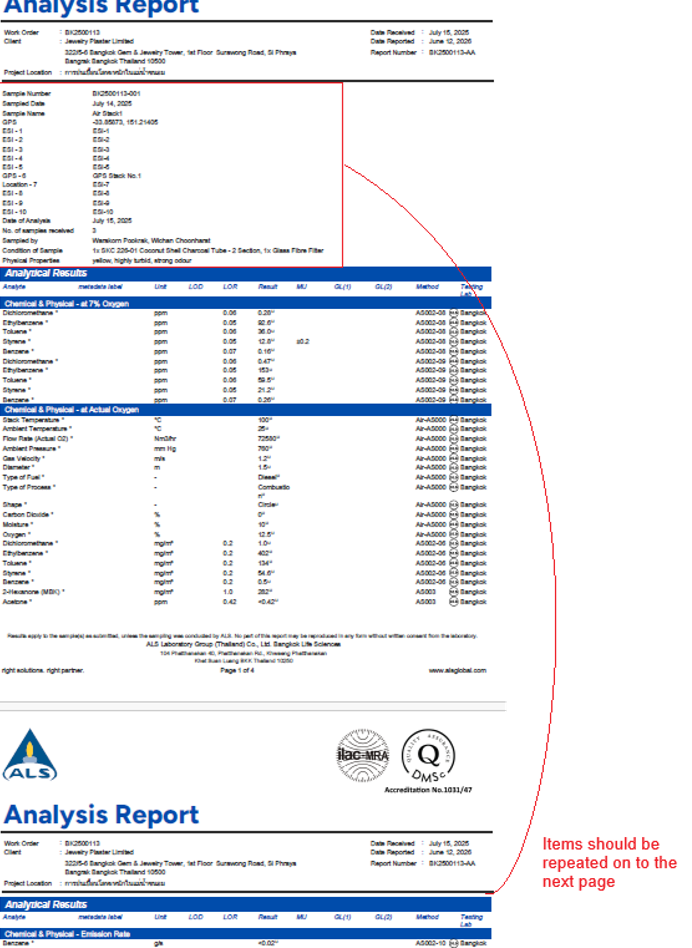
The attached sample has a simple table with two row groups, and "header" rows created via "Insert Row -> Outside Group - above".
The groups have "keep together" set.
But despite this, the header rows render at the bottom of one page, with data rows on the following page. This should never happen, I can't think of any case it would be expected (it would be like having "Chapter 2" at the bottom of a page when the text for it starts on the next page).
I also have a sample with just 1 row group, but with 2 detail rows, and the same thing happens. It only appears to work when there's just 1 row group and 1 detail row.
When generating PDF/UA files, we need to have special objects that are read by an internal system but ignored by screen readers. This cannot be achieved with the existing functionality.
It would be beneficial if we could configure reports so that specific objects inside the generated document are ignored by screen readers. For example, by setting a special value to the AccessibleRole property of a text box.
In the Q3 2026 release, Telerik Reporting updated the kendo font icons used by the web report viewers. Those icons are loaded alongside the report viewers and are not scoped to them, so they override the icons for elements outside the viewers.
For example, the Telerik UI for AJAX product is currently using kendo font icon subset that is older, so when I load the HTML5/HTML% WebForms report viewer on the page, AJAX's icons are overridden and incorrect.
Migrate the web reports viewers to use Kendo SVG Icons instead of the current font icons implementation, as they allow for better flexibility and render more nicely on the page, and will avoid the issue with overriding font icons when the viewers are used with other Telerik products.

I am using the HTML5 report viewer and seeing 4 errors in the WAVE tool, along with multiple alerts. See: https://wave.webaim.org/report#/https://demos.telerik.com/reporting/product-sales
Please consider addressing them.

I have localized a report with a Graph in the 'ar-SA' culture.
When exporting to PDF from the viewer, the report is generated as expected. In the Report Viewer's Preview, though, the Graph Legend and Labels are not correct:
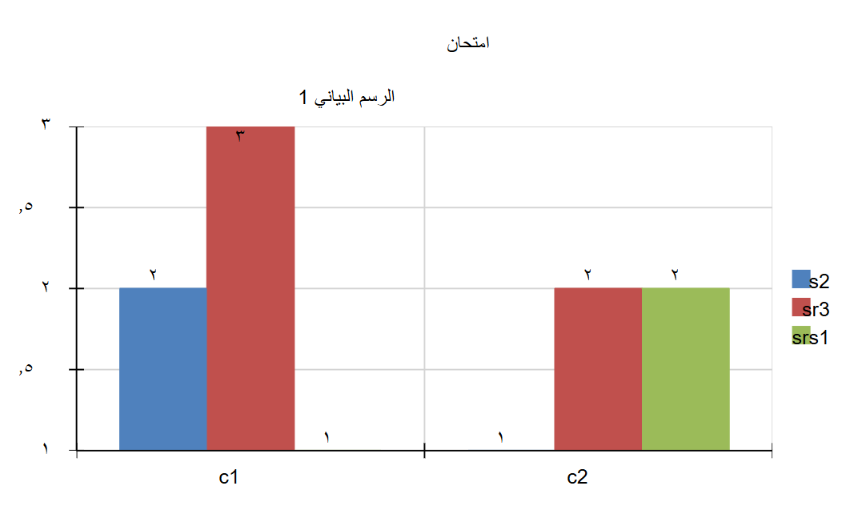
I am using Native Blazor Report Viewer, but the problem also reproduces in the HTML5-based web viewers, with all the themes I have tested.

Hello,
I see from support threads that Telerik really resists any changes to their concept of CSV rendering. And I also understand the reasoning in not changing any default behavior due to its potentially unwanted effect on established customers.
That said, I wonder if the ability to exclude hidden objects (TextBoxes for example) has been proposed and is in the list of potential enhancements. I wouldn't mind if it required a configuration setting like NoHiddenObjects = True where the default is False.
Has that been considered?


The data source preview in the web report designer does not show the full shape of the query. It has no horizontal scroll bar to verify the preview data for the entire projection.
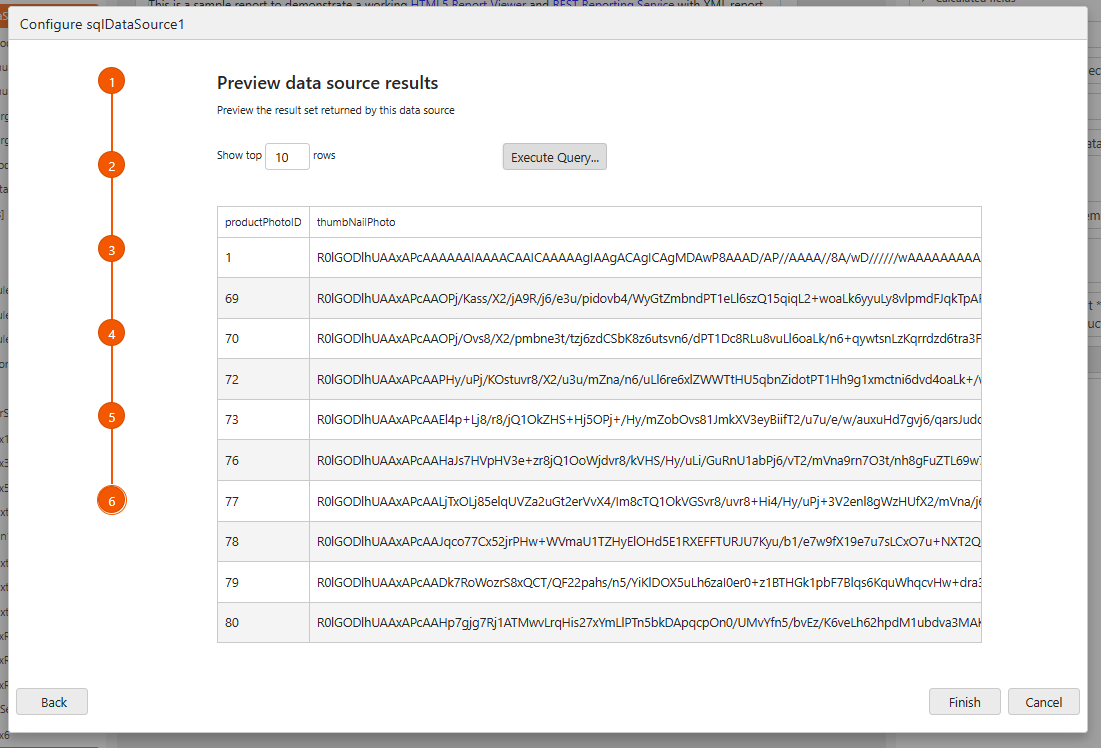
Please consider addressing this.
The Telerik.Reporting documentation mentions that the Telerik.Reporting.* libraries should be available on nuget.org with the most recent release. However, when I search for Telerik.Reporting in the NuGet Gallery, I am not able to find any Telerik.Reporting.* package. The other products we use (UI for WPF, Document Processing) seem to be available though.
-----------------------------------------
Staff note: On the Reporting side, our initial goal was indeed to make Telerik Reporting available through nuget.org, alongside the rest of the Telerik product portfolio. However, we are currently investigating an issue that is preventing us from publishing the Telerik.Reporting packages to nuget.org, which has delayed their availability.
Please use this feedback item to subscribe to updates and receive a notification as soon as the Telerik.Reporting packages become available on nuget.org.
When a Table has a Group PageBreak that splits the Table into more than one page, the items below the table are rendered after the first part of the Table (after the first page break), rather than under the whole table.
The issue occurs in hard pagination: PrintPreview of the viewers, PDF, etc.
Currently, if I want to see what the device info settings for an extension like the PDF are, I need to open the documentation - Telerik Reporting Configuring the Output Formats PDF Device Information Settings - Telerik Reporting, then copy the setting that I wish to use in my code.
It would be easier and safer if the device information settings for each format were exposed as a public enum/class. On that note, it would also be easier if the available formats were exposed as well, instead of manually typing them. For example:
public static classTelerikDeviceInfoSetting
{
    public static class PDF
    {
        public const string DOCUMENTTITLE = "DocumentTitle";
        public const string DOCUMENTAUTHOR = "DocumentAuthor";
        public const string DOCUMENTSUBJECT = "DocumentSubject";
        public const string DOCUMENTPRODUCER = "DocumentProducer";
        public const string DOCUMENTCREATOR = "DocumentCreator";
    }

    public static class XLSX
    {
        public const string USENATIVEPAGEHEADER = "UseNativePageHeader";
        public const string USENATIVEPAGEFOOTER = "UseNativePageFooter";
        public const string SHOWGRIDLINES = "ShowGridlines";
    }
}

public static class TelerikRenderingExtension

{

public const string PDF = "PDF";

public const string XLSX = "XLSX";

}
When I render a report with Gujarati language text to PDF on Windows, the GDI graphics engine is used and the text is displayed properly.
When I render the same report with the Skia graphics engine, on Windows or Linux, the characters are misplaced or incorrectly drawn.
Images taken with a mobile device are sometimes displayed in PictureBox rotated by 90, 180 or 270 degrees. The reason is that whenever a photo is taken, the device saves its current accelerometer orientation into a corresponding Exif tag with the image metadata, so this info is then read and taken into account by our Report Designer.
On export to MS Word, a numbered list that spans two pages restarts at (1) on the second page. Instead, the numbered list should continue numbering from the first page.
For example, if a list has five items and the fourth item starts on a new page, when I export the report to MS Word, the first three items are numbered (1), (2), and (3), and the last two items are numbered (1) and (2) again. The last two items should be numbered (4) and (5).
In addition, if an item in a numbered list splits between two pages, the item is numbered twice: once at the beginning of the item and again on the first line that appears on the next page. The line at the top of the second page is numbered (1). This second number should not appear.
The attached file shows both these issues.

Currently, the desktop viewers don't allow adding custom headers to their requests to the service.
In HTML5-based web viewers, this is possible through the AjaxPrefilter event.