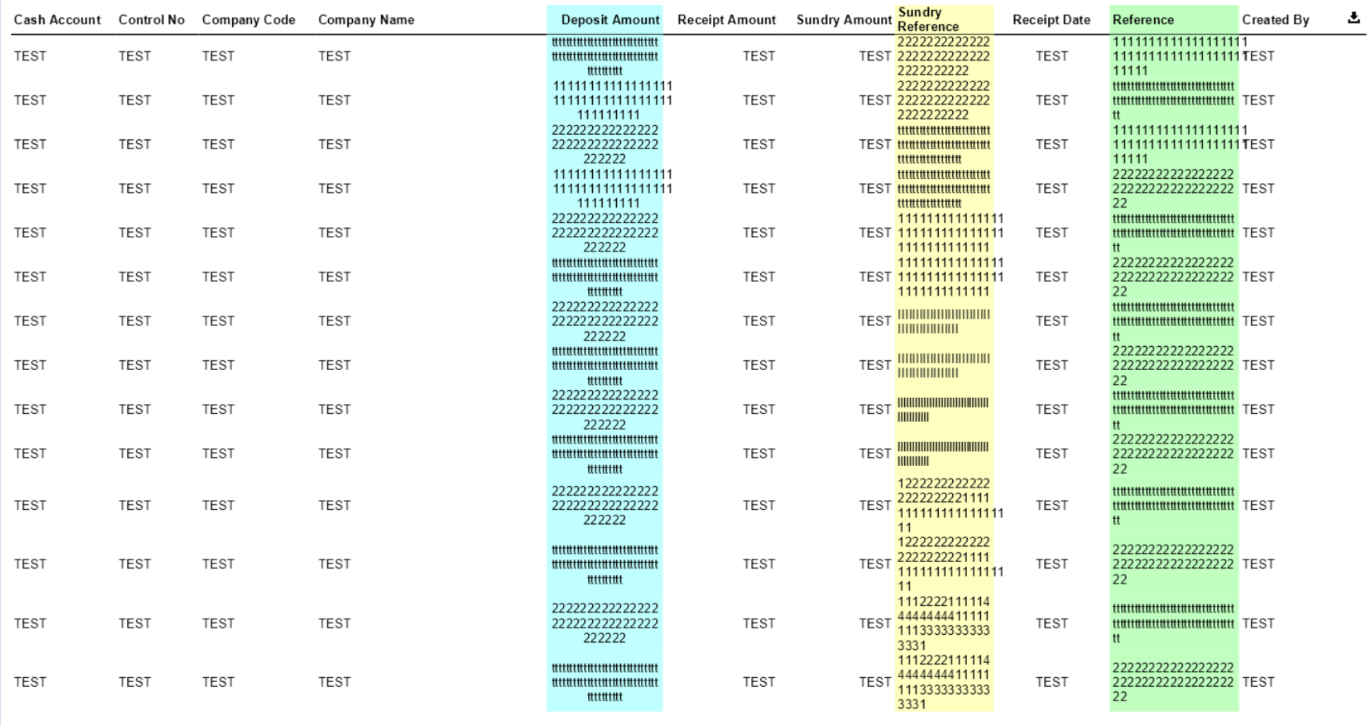
My table may contain text consisting only of repeating '1', i.e., "11111111111111111111111111111111". When this content cannot fit inside a single line, the Table generates a second row; however, part of the content spills out to the next Table column.
With other repeating characters like 'I', 'l', '2', and 't', the issue didn't reproduce. When the line contained other characters, the problem didn't occur as well.
I have a crosstab with a dynamic number of columns (time periods) that can exceed 15-20 columns. When exporting the report to PDF in A4 landscape format, excess columns are truncated and never printed on additional horizontal pages.
The issue is related to the Crosstab property 'RowHeadersPrintOnEveryPage'. When set to True, it places additional row headers on each page when using physical pagination. I suspect these additional headers are not taken into account when calculating the necessary page area, hence the final part of the Crosstab is skipped.

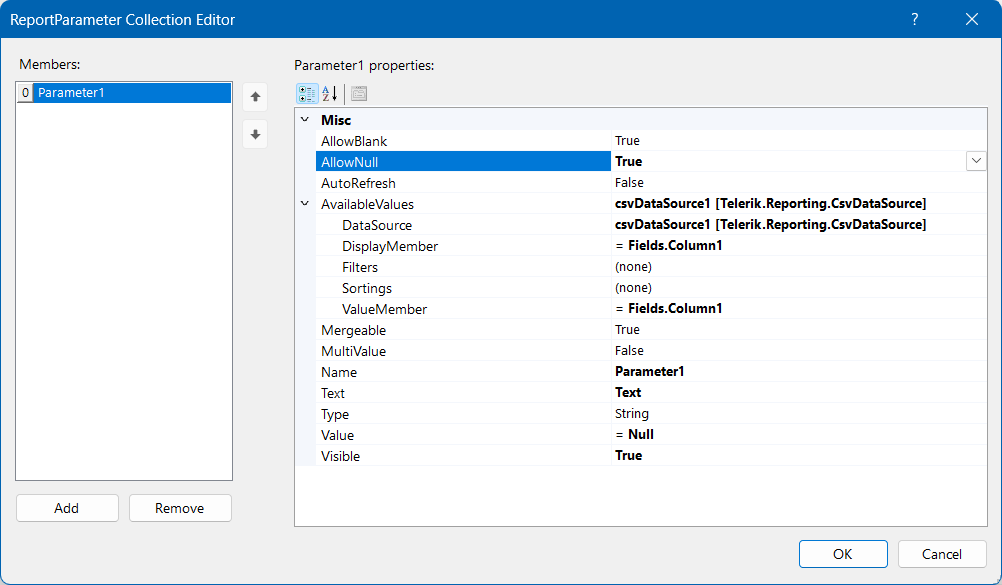
I have created a report parameter that accepts null as a value(AllowNull=True) and have set null as the default value by using the expression =Null on the Value property of the report parameter.
This report parameter also has a data source assigned to it so it has available values. Here is a look at the full setup:
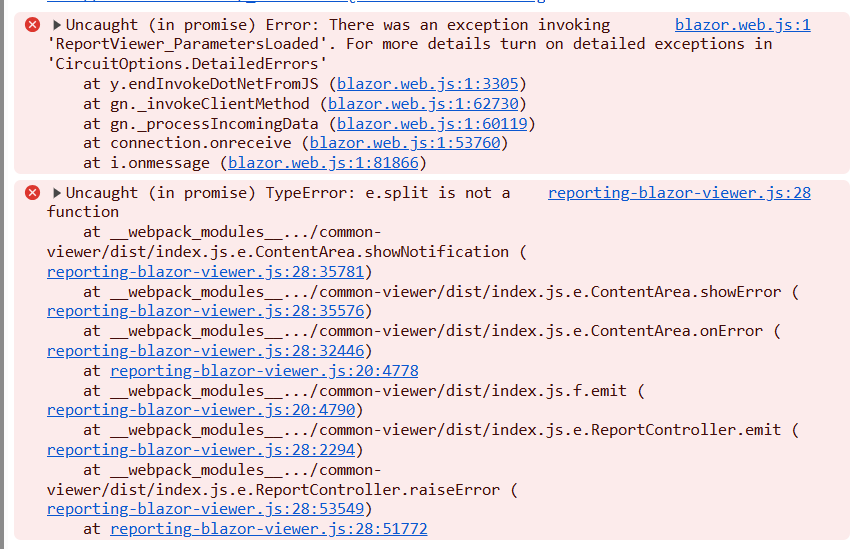
When I call the "getReportParameters()" function on the HTML5 Report Viewer, there is an exception thrown in the console that looks as follows:
telerikReportViewer:1 Error: The available values of parameter Parameter1 do not contain Value property that equals null
    at Ae (telerikReportViewer:1:45529)
    at Object.getReportParameters (telerikReportViewer:1:38265)
    at Object.getReportParameters (telerikReportViewer:1:108469)
    at <anonymous>:1:50
I try to select the Series Group for my LineSeries directly from the Graph Properties pane in the Standalone Report Designer, but the groups are not listed in the dropdown:

I am able to do this from the GraphSeries Collection Editor, though:

I am currently working on adapting our documents to meet EAA accessibility requirements, and I have upgraded Telerik Reporting to version 19.2.25.813.
I added { "EnableAccessibility", true } to the device information settings when exporting to PDF.
However, when I run the generated PDF through the PAC accessibility checker, it reports the following error:
One or more checks could not be completed.

Please copy the error message and send it by email to pac@axes4.com so that we can improve the product.

PAC (24.4.2.0)

Stacktrace 1:
Not Same Dimension.

   at LiM40lTFOn0eWLuaajvf.A1qp40TFKIn2jBWwxv0d..ctor(Byte[]  , Byte[]  )
   at UmAt0CTVmfKfDqmcrmt6.HLJIPdTVqEyuiUM22OWj.eILTFMl6QDL(Byte[]  , Byte[]  )
   at Qww7PoTFksraZMkU6m8a.sxUvkLTF4dybUR9VwcRe.ss4TFEoiqAI(geZKyFTFS41IUbuH7c4u  , WdRarplBO5RB6PweG24O&  , HLJIPdTVqEyuiUM22OWj  )
   at Qww7PoTFksraZMkU6m8a.sxUvkLTF4dybUR9VwcRe.NkpTFX7G98N(Stream  )
   at G3eiSBGKQYDyZb8MKn4.s1GbJnGU5fGAYJDEswn.YUrlmAmFmey(InR8VoTVQP2XaLkCJpHB[]  , String&  )
   at vjQ4yllNOb51ltZ35aif.BbwuGqlNKtxwJLI1h3YW.OnText(RkwmSj3AKXUF7SYMBus  )
   at zSuFuLlooBaWZ1KqkqIR.Xjv9w4loJqr1RoZtRHCI.OHEloDJOVda(Action`1  )
<===========================>

Stacktrace 2:
Not Same Dimension.

   at LiM40lTFOn0eWLuaajvf.A1qp40TFKIn2jBWwxv0d..ctor(Byte[]  , Byte[]  )
   at UmAt0CTVmfKfDqmcrmt6.HLJIPdTVqEyuiUM22OWj.eILTFMl6QDL(Byte[]  , Byte[]  )
   at Qww7PoTFksraZMkU6m8a.sxUvkLTF4dybUR9VwcRe.ss4TFEoiqAI(geZKyFTFS41IUbuH7c4u  , WdRarplBO5RB6PweG24O&  , HLJIPdTVqEyuiUM22OWj  )
   at Qww7PoTFksraZMkU6m8a.sxUvkLTF4dybUR9VwcRe.NkpTFX7G98N(Stream  )
   at G3eiSBGKQYDyZb8MKn4.s1GbJnGU5fGAYJDEswn.YUrlmAmFmey(InR8VoTVQP2XaLkCJpHB[]  , String&  )
   at vjQ4yllNOb51ltZ35aif.BbwuGqlNKtxwJLI1h3YW.OnText(RkwmSj3AKXUF7SYMBus  )
   at zSuFuLlooBaWZ1KqkqIR.Xjv9w4loJqr1RoZtRHCI.OHEloDJOVda(Action`1  )
<===========================>

Stacktrace 3:
Not Same Dimension.

   at LiM40lTFOn0eWLuaajvf.A1qp40TFKIn2jBWwxv0d..ctor(Byte[]  , Byte[]  )
   at UmAt0CTVmfKfDqmcrmt6.HLJIPdTVqEyuiUM22OWj.eILTFMl6QDL(Byte[]  , Byte[]  )
   at Qww7PoTFksraZMkU6m8a.sxUvkLTF4dybUR9VwcRe.ss4TFEoiqAI(geZKyFTFS41IUbuH7c4u  , WdRarplBO5RB6PweG24O&  , HLJIPdTVqEyuiUM22OWj  )
   at Qww7PoTFksraZMkU6m8a.sxUvkLTF4dybUR9VwcRe.NkpTFX7G98N(Stream  )
   at G3eiSBGKQYDyZb8MKn4.s1GbJnGU5fGAYJDEswn.YUrlmAmFmey(InR8VoTVQP2XaLkCJpHB[]  , String&  )
   at tyAsEn3twQpti0lgIPO.RkwmSj3AKXUF7SYMBus.get_UnicodeText()
   at Xw4lWvlCL4434RXaMsKT.F5WZJylCrhBUjVHuUbsX.OnText(RkwmSj3AKXUF7SYMBus  )
   at zSuFuLlooBaWZ1KqkqIR.Xjv9w4loJqr1RoZtRHCI.OHEloDJOVda(Action`1  )
<===========================>

Stacktrace 4:
Not Same Dimension.

   at LiM40lTFOn0eWLuaajvf.A1qp40TFKIn2jBWwxv0d..ctor(Byte[]  , Byte[]  )
   at UmAt0CTVmfKfDqmcrmt6.HLJIPdTVqEyuiUM22OWj.eILTFMl6QDL(Byte[]  , Byte[]  )
   at Qww7PoTFksraZMkU6m8a.sxUvkLTF4dybUR9VwcRe.ss4TFEoiqAI(geZKyFTFS41IUbuH7c4u  , WdRarplBO5RB6PweG24O&  , HLJIPdTVqEyuiUM22OWj  )
   at Qww7PoTFksraZMkU6m8a.sxUvkLTF4dybUR9VwcRe.NkpTFX7G98N(Stream  )
   at G3eiSBGKQYDyZb8MKn4.s1GbJnGU5fGAYJDEswn.YUrlmAmFmey(InR8VoTVQP2XaLkCJpHB[]  , String&  )
   at tyAsEn3twQpti0lgIPO.RkwmSj3AKXUF7SYMBus.get_UnicodeText()
   at ysJjM9lSiQESKK4PGybl.Ew1sjolSWTTCG8Dr2kJW.w3BlSPYBDdu(Os7IcEbiPhfT5JvSVNB  )
   at System.Linq.Enumerable.All[TSource](IEnumerable`1 source, Func`2 predicate)
   at System.Linq.Enumerable.All[TSource](IEnumerable`1 source, Func`2 predicate)
   at System.Linq.Enumerable.All[TSource](IEnumerable`1 source, Func`2 predicate)
   at k8l6oaleGgjW6MRKlmWI.IHPaBIlekNuIBbsppXFp.OnStructureElementStart(G23gGNHErJQY3Wrw4QJ  )
   at zSuFuLlooBaWZ1KqkqIR.Xjv9w4loJqr1RoZtRHCI.OHEloDJOVda(Action`1  )
<===========================>

Stacktrace 5:
Not Same Dimension.

   at LiM40lTFOn0eWLuaajvf.A1qp40TFKIn2jBWwxv0d..ctor(Byte[]  , Byte[]  )
   at UmAt0CTVmfKfDqmcrmt6.HLJIPdTVqEyuiUM22OWj.eILTFMl6QDL(Byte[]  , Byte[]  )
   at Qww7PoTFksraZMkU6m8a.sxUvkLTF4dybUR9VwcRe.ss4TFEoiqAI(geZKyFTFS41IUbuH7c4u  , WdRarplBO5RB6PweG24O&  , HLJIPdTVqEyuiUM22OWj  )
   at Qww7PoTFksraZMkU6m8a.sxUvkLTF4dybUR9VwcRe.NkpTFX7G98N(Stream  )
   at G3eiSBGKQYDyZb8MKn4.s1GbJnGU5fGAYJDEswn.YUrlmAmFmey(InR8VoTVQP2XaLkCJpHB[]  , String&  )
   at tyAsEn3twQpti0lgIPO.RkwmSj3AKXUF7SYMBus.get_UnicodeText()
   at bKc5VfoKOVpfI2iB89a.DBfa8VoUYxTZI0B53G7.get_UnicodeText()
   at q7u9wileh20pIa0tWKql.tdng87le0gdU2UFgOyxR.OnMarkedContentStart(Yeb5V1SeYY62eYUqquq  )
   at zSuFuLlooBaWZ1KqkqIR.Xjv9w4loJqr1RoZtRHCI.OHEloDJOVda(Action`1  )
The problem doesn't occur if I upgrade to an older Reporting version.
When using the Native Blazor report viewer with the latest version of Telerik UI for Blazor (12.0.0), the following exception is thrown:
Unhandled exception rendering component: Object of type 'Telerik.Blazor.Components.TelerikToolBar' does not have a property matching the name 'Adaptive'.

My project uses the following two dependencies:
- Telerik.UI.for.Blazor (v9.1.0)
- Telerik.ReportViewer.BlazorNative (v19.1.25.716)
However, when I build my application and navigate to the page of the Native Blazor report viewer, the following error is thrown:
“Telerik.Blazor.Components.TelerikWindow does not have a property matching the name ‘Centered’.” at Microsoft.AspNetCore.Components.Reflection.ComponentProperties.ThrowForUnknownIncomingParameterName(Type targetType, String parameterName) at Microsoft.AspNetCore.Components.Reflection.ComponentProperties.SetProperties(ParameterView& parameters, Object target) at Microsoft.AspNetCore.Components.ParameterView.SetParameterProperties(Object target) at Microsoft.AspNetCore.Components.ComponentBase.SetParametersAsync(ParameterView parameters) at Telerik.Blazor.Components.TelerikWindow.SetParametersAsync(ParameterView parameters) at Microsoft.AspNetCore.Components.Rendering.ComponentState.SupplyCombinedParameters(ParameterView directAndCascadingParameters)
We see a console error when navigating away from the Blazor Native report viewer page. The page that contains the breadcrumb and the viewer has query-supplied parameters.
I am using the new Coded Reports feature in the Standalone Report Designer for .NET, and I have a class library with reports, that depends on another project.
When I try to load a report from the reports class library, I get an error that the dependent project's assembly cannot be loaded despite being present in the report folder's bin directory.
In MSSQL, you may use syntax like 'StoredProcedureName;1' to indicate stored procedure versioning, but it is not yet supported by Telerik Reporting.
I use such syntax and need to remove the version to make this work in Telerik Reporting.
It would be great if you also added support for versioning in MSSQL stored procedures.
If you add transparency to a Graph line, for example, the Y-axis, with an alpha value: '150, 255, 255, 192', it is respected in the Standalone Report Designer, where the rendering format is Image.
In the Web Report Designer and in the HTML5 Report Viewer preview, the alpha value is ignored, and the color is rendered as '255, 255, 192', which removes the transparency.
We are using the Telerik Reporting component and are very happy
We really wanted to use the Table of Contents component in our reports
The Table of Contents works great but unfortunately does not support right-to-left in Hebrew
I guess for you this is a small fix and for us it will be a big relief
We ask for your help and improve the component for us so that the wonderful Table of Contents supports right-to-left
Thank you
Tamar
Currently, if Thread.CurrentThread.CurrentCulture set to tr-TR (can be also reproduced with az-AZ and maybe some other cultures) some tags are ignored in HtmlTextBox, but they work if typed in UpperCase. This can be reproduced with any supported tag which contains letter "i" like "div" or "li".
For example, we have two ol list but one with LI and the other one with li tags:
<ol>
<LI>first</LI>
<LI>second</LI>
</ol>
<ol>
<li>first</li>
<li>second</li>
</ol>
This is how it is rendered in PDF:

When the current thread culture is set to Turkish (tr-TR), the lowercase and uppercase conversion rules differ from English — especially for the letter "i".
In Turkish:
"i".ToUpper()→ İ (with a dot)"I".ToLower()→ ı (dotless i)
Our assumption that the Telerik HtmlTextBox internally parses and maps HTML tags by converting them to uppercase. When the Turkish culture is active, this conversion causes tag names to break, which is not a valid tag, so ordered lists fail to render.
Best regards,
Denis
ADA Accessibility is a priority for our customers, so we are aiming to ensure logical tabbing order for keyboard users.
I've noticed that the RowHeadersPrintOnEveryPage attribute, while very useful for creating more readable PDF exports, seems to result in some strange screen reader behavior when set to True.
The first problem is with the strange tabbing order in the live environment. The second column header is the first to receive focus, followed by the remaining column headers, then the data fields under the first column receive focus in a vertical list, until finally the first column header receives focus. Without the default RowHeadersPrintOnEveryPage setting (False), the first column header is the first to receive focus, which is expected.
In addition to the wrong tabbing order, the RowHeaderPrintOnEveryPage causes the screen reader to announce the incorrect column associated with a particular cell. I use the Windows Narrator. Other screen readers may result in slightly different behavior.
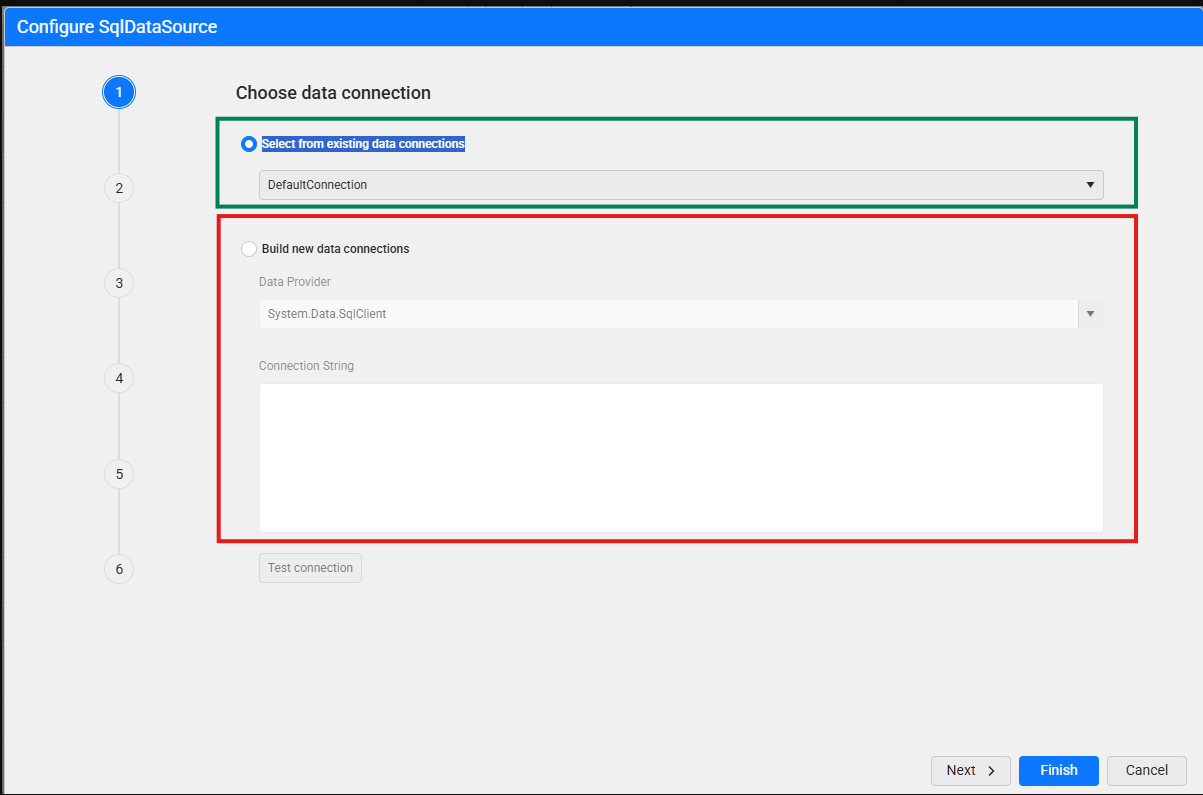
WebReportDesigner (Blazor) - permission to restrict "Build new data connections" and allow to use only "Select from existing data connections".
It isn't required, but would be nice have button "Test connection" in the bottom enabled to verify predefined connection