

I am trying to add aggregation to the grouping and display them in the group footers. I am successfully returning the aggregated values but they are not displayed in the GroupFooterTemplate.

I would like a Blazor PropertyGrid with
-- that could be bound to an instance of a custom Type that implemented INotifyPropertyChanged
-- with expandable/collapsible sections with the ability to prevent a user from expanding a collapsed section (e.g. the user lacks privileges to see that section's data)
-- would keep track of its UI state including collapsed sections (similar to the excellent implementation in Telerik's Blazor Grid)
-- that would allow the use of all Telerik Blazor editors as cell-value editors
I am interested in using this component primarily as a data-entry UX in a data-entry-intensive line-of-business application. Such a grid offers standard navigation on all data-entry screens in the application, eliminating tab-order, thereby greatly simplifying the end-user experience. The expanding/collapsing sections make it very economical in its use of screen real-estate. I have used such a component (from a competitor of Telerik) in a WinForms application with excellent results.

- The PDF Viewer does not display the initial file if Zoom is set to FitToWidth or FitToPage. This is due to --scale-factor: NaN; --total-scale-factor: NaN; set on the PDF Viewer element.
- If the PDF Viewer initially shows with no loaded file, setting Zoom to FitToWidth or FitToPage initially or after opening a file leads to infinity zoom due to --scale-factor: Infinity; --total-scale-factor: Infinity; set on the PDF Viewer element.
The only scenario that works is to set the initial Zoom to a numeric value and have an open file by default.
The NOW button in the TimePicker's TimeView sets the time value, according to the server's time zone. Instead, it should use the client-side (user) time zone.
===
Telerik edit:
In the meantime, you can subscribe to the TimePicker's ValueChanged event and detect when the user clicks on Now. In such cases, the event handler will receive the current server time with a small margin of error, that depends on the latency.
<TelerikTimePicker Value="@TimePickerValue"
                   ValueChanged="@( (DateTime? d) => TimePickerValueChanged(d) )">
</TelerikTimePicker>

@code {
    private DateTime? TimePickerValue { get; set; }

    private void TimePickerValueChanged(DateTime? newValue)
    {
        if (newValue.HasValue && newValue - DateTime.Now < new TimeSpan(0, 0, 1))
        {
            // Retrieve and set the correct user's local time. The dummy code below is just for testing.
            TimePickerValue = DateTime.Now.AddMinutes(2);
        }
        else
        {
            TimePickerValue = newValue;
        }
    }
}
Try with culture es-ES and you will see the problem.
When es-ES, "dot [.]" is not a decimal separator, therefore you can't use the "NumpadDecimal" key to write a decimal number.
@using System.Globalization
<b>Culture:</b> @CultureInfo.CurrentCulture.Name;
<br />
<b>Culture UI:</b> @CultureInfo.CurrentUICulture.Name
<br />
<b>DefaultThreadCurrentCulture:</b> @CultureInfo.DefaultThreadCurrentCulture?.Name
<br />
<b>DefaultThreadCurrentUICulture:</b> @CultureInfo.DefaultThreadCurrentUICulture?.Name
<br /><br />
<b>Val 1:</b>
<TelerikNumericTextBox @bind-Value="@Val1" Decimals="6" Width="100px" />
<TelerikNumericTextBox @bind-Value="@Val1" Decimals="6" Width="100px" />
<input type="number" @bind-value="@Val1" step="any" style="width: 100px" />
<br />
<b>Val 2:</b>
<input type="number" @bind-value="@Val2" step="any" style="width: 100px" />
<input type="number" @bind-value="@Val2" step="any" style="width: 100px" />
@code {
decimal Val1 { get; set; }
decimal Val2 { get; set; }
protected override void OnInitialized()
{
CultureInfo.CurrentCulture = CultureInfo.CurrentUICulture = CultureInfo.DefaultThreadCurrentCulture = CultureInfo.DefaultThreadCurrentUICulture = new CultureInfo("es-ES");
//CultureInfo.CurrentCulture = CultureInfo.CurrentUICulture = CultureInfo.DefaultThreadCurrentCulture = CultureInfo.DefaultThreadCurrentUICulture = new CultureInfo("en-US");
}
}
[ADMIN EDIT]
In general, our components obey the culture that is set in the application. If the current culture requires a "," decimal separator, our component will accept commas and ignore dots. Our component doesn't know if the user is pressing the decimal separator key on the numeric pad, or the "standard" [ > . ] key.
What we can do to improve the behavior is to implement a feature for automatic handling of the decimal separator character. In other words, if the component detects invalid decimal separator input, it will switch to the correct one. This feature will handle the Numpad key and output it in the right culture.
Here is a possible workaround that uses JavaScript to intercept the "other" decimal separator and insert the "correct" one in the NumericTextBox.
@inject IJSRuntime js

<span @onkeydown="@( (KeyboardEventArgs args) => OnSpanKeyDown(args, "ntb1") )">
    <TelerikNumericTextBox @bind-Value="@DValue"
                           Width="200px"
                           Id="ntb1" />
</span>

Code: @LogCode , Key: @LogKey

<!-- Move JS to external JS file in production apps -->
<script suppress-error="BL9992">
    function addDot(ntbId) {
        var textbox = document.querySelector("#" + ntbId);
        if (textbox && textbox.value.indexOf(".") == -1) { // or ","
            textbox.value += "."; // or ","
        }
    }
</script>

@code {
    decimal DValue { get; set; }

    string LogCode { get; set; }
    string LogKey { get; set; }

    async Task OnSpanKeyDown(KeyboardEventArgs args, string ntbId)
    {
        LogCode = args.Code;
        LogKey = args.Key;

        if (args.Key == ",") // or "."
        {
            await js.InvokeVoidAsync("addDot", ntbId);
        }
    }
}
Another option in the meantime is to use a standard HTML input or InputNumber with the Telerik CSS class "k-textbox". This way the input will look the same as a Telerik textbox and keep the app look consistent.
I'm trying to use the Blazor editor but the "Insert Image" function is very basic. Previously using Webforms & Core the insert image in the editor presented the user with a file management and image upload popup. Is this functionality available with the Blazor component?
=====ADMIN EDIT=====
Possible alternative:
- Utilize a custom Editor's tool that opens a Window or Dialog containing a FileManager.
- Use the FileManager's SelectedItemsChanged event to determine which image the user wants to insert into the Editor.
- Programmatically execute the Editor's insertImage command.
Due to the lack of an option to specify position, the tooltips cover part of the line markers, e.g., in a horizontal line Chart scenario.

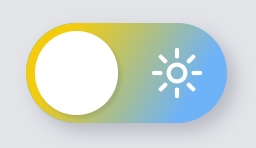
I would like to see icon support for the switch control. See the attached screen shot for the use case.

Support multiple users editing the same content in an editor.
This would be similar to the editor in something like confluence or online Word.
Regards