When unformatted multi-line content is pasted in an existing paragraph inside the Kendo Editor, the paragraph is removed and the pasted content is inserted in the body of the Editor.
Steps to reproduce:
- Open: https://dojo.telerik.com/osANirag/8
- Type in the content editable: "text row 1", hit ENTER, type "text row 2"
- Copy the content from the content editable.
- Paste the content in the first paragraph in the Kendo Editor
Result:
The pasted content replases the paragraph.
Expected Result:
The pasted content should be inserted in the paragraph.

Bug report
The kendo.culture.nb-NO.min.js file contains some unwanted characters: "Â".
Reproduction of the problem
See Ticket ID: 1486493 for more details.
The unminified file looks correctly: https://github.com/telerik/kendo-ui-core/blob/master/src/cultures/kendo.culture.nb-NO.js
Current behavior
Expected/desired behavior
Environment
- Kendo UI version: 2020.3.915
- jQuery version: x.y
- Browser: [all]
Bug report
ContextMenu allows having focused and hovered items simultaneously.
Reproduction of the problem
1. Open the Dojo2. Right-click to open the ContextMenu and hover over the first item.
3. Start navigating in the ContextMenu with the down arrow without moving the cursor
Current behavior
There is an item marked with 'k-hover' class and an item marked with 'k-focus' class.
Expected/desired behavior
It is supposed to have a single active item in the ContextMenu.
Environment
- Kendo UI version: 2022.1.412
- Browser: [all ]
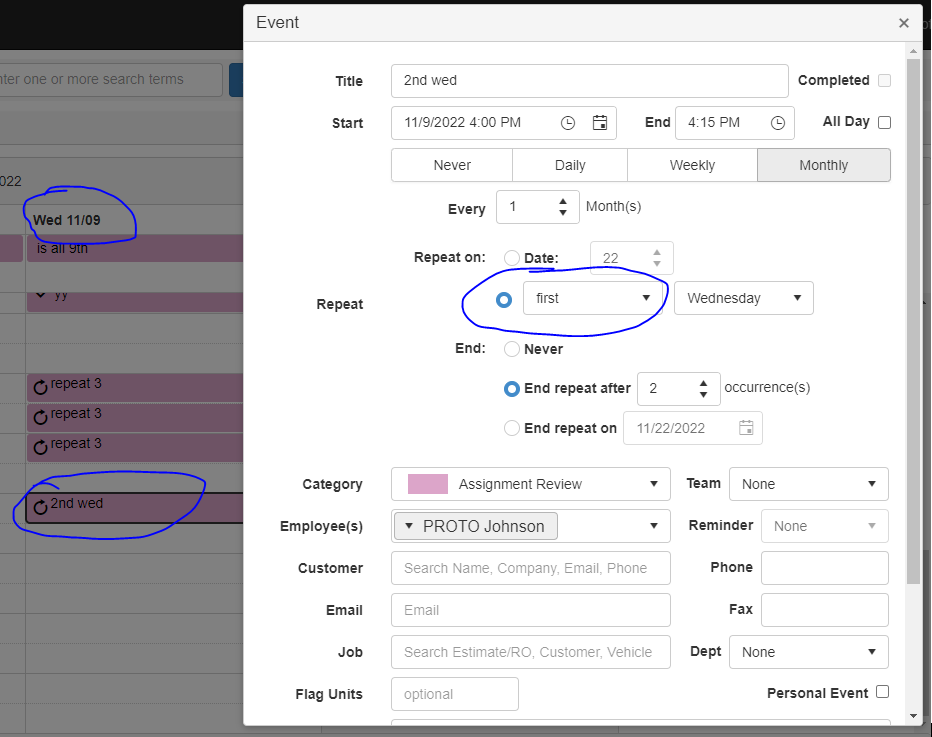
My recurrence rule is: FREQ=MONTHLY;COUNT=2;INTERVAL=1;BYSETPOS=2;BYDAY=WE;WKST=SU. This event falls on the second Wednesday of the month for two months in a row. When I edit the event, the wrong option is picked. Note in the screenshot attached we are on 11/09/2022 which is the second Wednesday. And the scheduler correctly shows this event. But the edit window sets the properties wrong. I am using a custom template for the edit window, however the recurrence editor portion is unmodified.
I was able to fix this in the Kendo.all.js file directly. The highlighted lines below were added. When I publish this for customers I use the Kendo custom download tool to get a minified script of only what I need. I then need to carefully port this change using Notepad++. This makes it tough to update versions which is why I am a few versions back.


There is an issue regarding text inputs in forms, when clicking the label (in a chrome emulator e.g. https://demos.telerik.com/kendo-ui/m/index#mobile-forms/index) or when clicking the form (on android).
The input and label move to the left edge.
When a kendoContextMenu is applied to a combobox (html tag select) you are not able to show the select options by tapping it. The behaviour is on mobile browser only (tested iPad and Google Chrome developer tools with device toolbar enabled).
I reproduced the issue in telerik dojo, here is the code.
<!DOCTYPE html>
<html>
<head>
    <base href="https://demos.telerik.com/kendo-ui/menu/context-menu">
    <style>html { font-size: 14px; font-family: Arial, Helvetica, sans-serif; }</style>
    <title></title>
    <link rel="stylesheet" href="https://kendo.cdn.telerik.com/2021.1.330/styles/kendo.common-bootstrap.min.css" />
    <link rel="stylesheet" href="https://kendo.cdn.telerik.com/2021.1.330/styles/kendo.bootstrap.min.css" />
    <link rel="stylesheet" href="https://kendo.cdn.telerik.com/2021.1.330/styles/kendo.bootstrap.mobile.min.css" />

    <script src="https://kendo.cdn.telerik.com/2021.1.330/js/jquery.min.js"></script>


    <script src="https://kendo.cdn.telerik.com/2021.1.330/js/kendo.all.min.js"></script>


</head>
<body>
    <div id="example">
      <select>
        <option>Opzione 1</option>
        <option>Opzione 2</option>
        <option>Opzione 3</option>
      </select>

    <ul id="menu">
        <li>
            <img src="../content/web/toolbar/reply.png" /> Reply
        </li>
    </ul>

</div>
<script>
    $(document).ready(function() {
        setTimeout(function () {
            var initMenu = function () {
                menu = $("#menu").kendoContextMenu({
                    target: "select",
                    select: function(e) {
                        // Do something on select
                    }
                });
            };

            initMenu();
        }, 0);
    });
</script>

</body>
</html>
In a grid with virtualization, when just normally scrolling down requests for the exact same data are often sent multiple times after each other. The reason for this is probably that the grid sends an asynchronous request for example Top 100, Skip 200 and then does not keep track of that it is still waiting for a reply for this request, before asking for the same data a short period later.
Commonly requests for the same data is made 2 or 3 or more times after each other, causing performance problem at the server side and in many cases unnecessary calls to the database. Fixing this should lower the number of requests for data to the server considerably, maybe with a factor two or more with just normal grid operation when the user is just scrolling down to view more data in the grid.
To demonstrate the problem, open a copy of the virtualization grid demo, for example here:
https://dojo.telerik.com/iXijoyaY
Open the Developer Tools and just observe which network requests are sent to the server. Just scroll down in any way and observe that very often the exact same request is made. A request for the same data has the same Top and Skip values in the parameters sent the server. You can see the servers reply is exactly the same JSON data multiple times after each other.
Solving this performance problem almost completely would seemingly be to in a variable just keep track of the "Latest request" sent, since the problem happens mostly just with normal scrolling in one direction with request sent after each other. So one would need to keep track of that a call for Top 100, Skip 200 has been made, and if the program wants to request the exact same data again, just wait for a reply for the first request, instead of sending a new one. (If needed, send a new request only after a specific timeout for a reply for the first one).
A more thorough solution would be to have a data structure to keep track of the Top and Skip tuples for all the calls to the server that has not yet have had a reply from the server, and not repeat those exact same calls again if still waiting for a reply for the first request.
Bug report
When a decimal number has 8 digits after the decimal separator and '#' is used for formatting the precision is lost and the number is rounded.
Reproduction of the problem
- Open the Dojo example and check the result in the console
Current behavior
kendo.toString(0.00000015,"###.########" returns 0.0000002
Expected/desired behavior
The number should not be rounded and the precision should not be lost. The results should be the same with kendo.toString(0.00000015,"n8") and kendo.toString(0.00000015,"0.00000000")
Environment
- Kendo UI version: 2022.3.1109
- Browser: [all ]
This is an error that took us an hour to figure out.
We are using the right-arrow icon as part of the content within a collapsible header to represent a state transition. (See image)
We found that the expand/collapse icon did not appear.
Further investigation reveals that if the header content contains a span with a class matching the regular expression k-i-arrow.* then the expand/collapse icon doesn't work. It could contain anything else, it was just that one class pattern that threw it.
See this example. https://dojo.telerik.com/EwAsaKAf/3
I also posted a forum message here: https://www.telerik.com/forums/expand-collapse-arrow-fails-to-appear-if-a-class-matching-a-certain-pattern-appears-anywhere-in-the-header
This is clearly a bug, and one that I suspect can be fixed easily.
Hello!
Prior to 2024.2.514 (2024 Q2), the DateRangePicker would "force users first to select start and then end range regardless of the date input selected" [1,2]. However, with the latest 2024 Q2 release, clicking the End input on the DateRangePicker selects the range end.
I did not see this specifically mentioned in the release notes, https://www.telerik.com/support/whats-new/kendo-ui/release-history/kendo-ui-for-jquery-2024-2-514-(2024-q2), so I am reporting this as a bug.
Here is a basic Dojo to demonstrate: https://dojo.telerik.com/IWAbUpuV. You can see the previous behavior by changing the library to the previous version (2024.1.319).
References

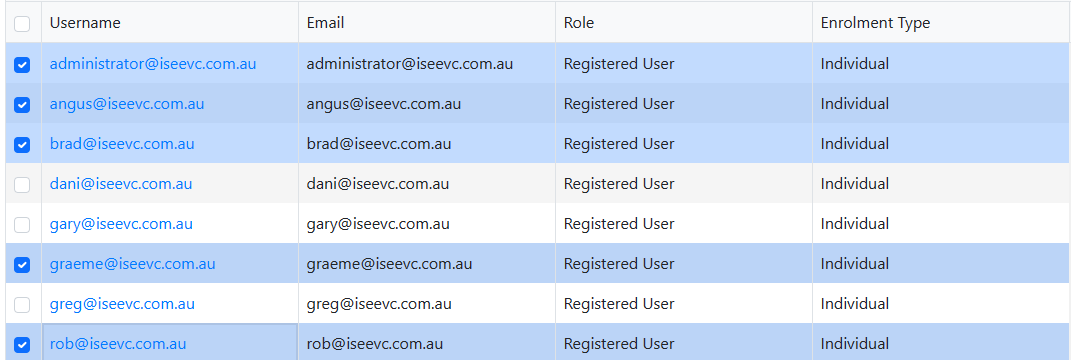
grid.exportSelectedToExcel(true) is working for continuous selection ranges, displaying the header column and then the selected entries in the excel file.
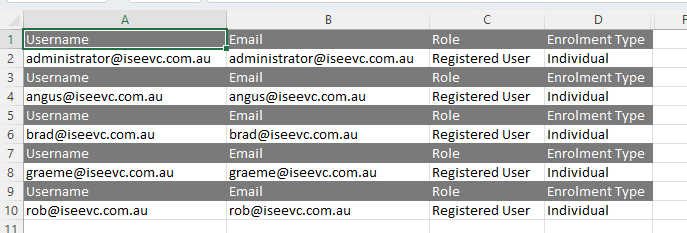
However, when the selection is not continuous (for example, maybe I have the first row selected and the third row selected, but not the second), for every row that is selected it adds a new column header row.
I've included some screenshots as an example:
SELECTED ROWS IN GRID:
EXPORTED USING grid.exportSelectedToExcel(true):
I have testesd this on multiple versions, including 2023.1.314 and 2022.2.621
I would appreciate any assistance with this.
Thanks
See demo page: https://docs.telerik.com/kendo-ui/api/javascript/ui/colorpicker/configuration/clearbutton
The example uses "<input id="colorpicker" type="color" />". Opening the preview reveals a black color.
Change the input-tag to div and the 'clear'-style is presented in the preview.
Or remove the color type when using the input-tag: "<input id="colorpicker" />" also correctly represents clear.
I can also locally reproduce it with Kendo UI jQuery v2024.4.1112.
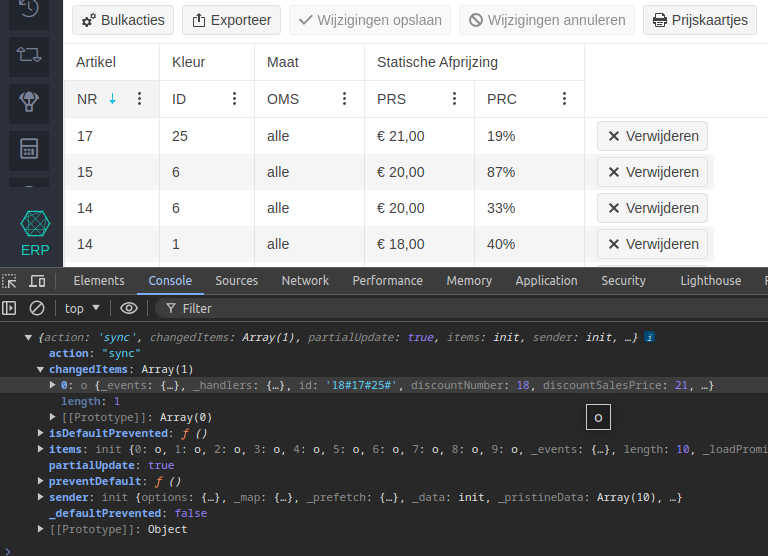
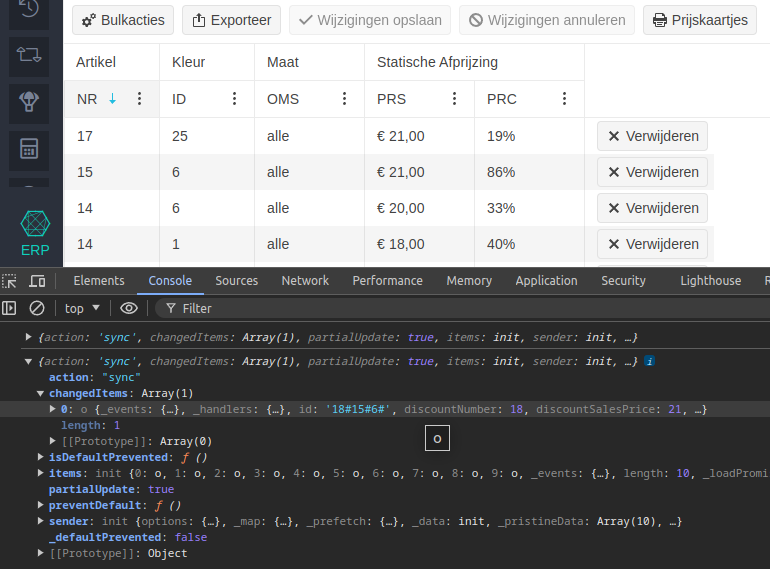
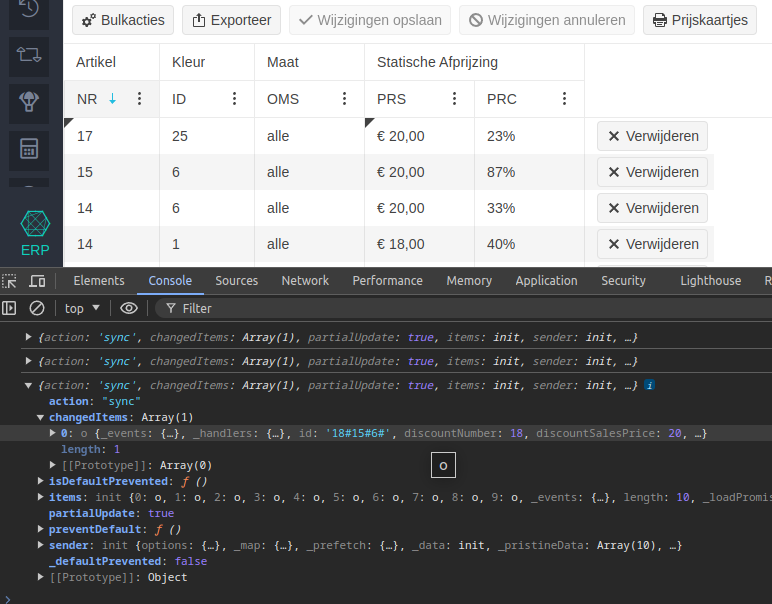
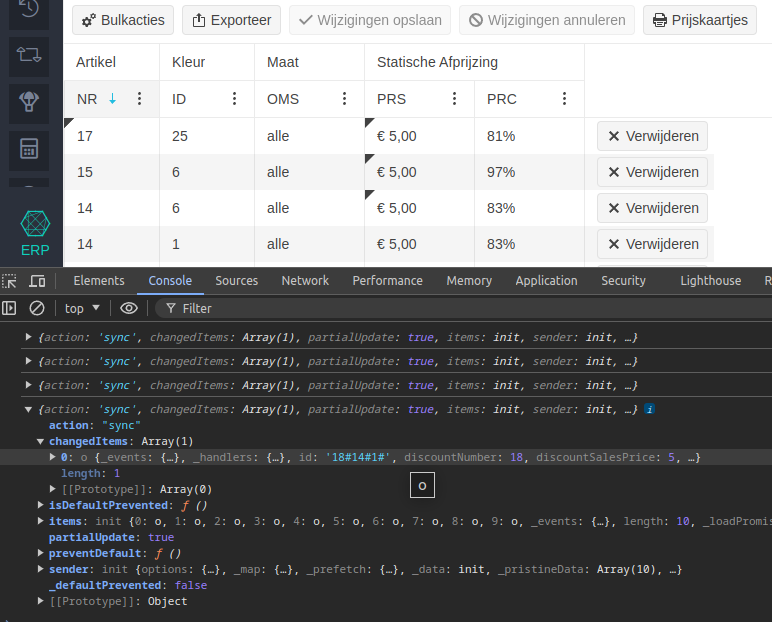
When I incell edit multiple rows I only receive a sync callback through `change` on the datasource for the last row with only that last row in the "changedItems". This results in the grid not removing the dirty indicator for any of the other rows, only the last one is removed. The rows are updated properly and I if I were to manually call grid.refresh() it removes the indicators. If I update the rows individually it has no problems.
Here I've updated only the first row:
Here I've updated only the second row:
Here I've updated the first 2 rows at the same time and only the last one is detected as updated:
Here I've updated the PRS column for all 4 rows to "5" and it saved correctly, but only the last row is detected as updated in the grid:
As there's a lot of code involved I can't just paste it here, I can provide snippets or information about particular settings though.
Bug Title: Columns are not programmatically associated with their table headers.
Severity: Sev2 (High)
Test Environment:
OS Version: 22H2 (OS Build 25352.1)
URL: https://ppe.oneidentity.core.azure-test.net/
Edge Dev: Version 114.0.1807.6 (Official build) dev (64-bit)
Screen Reader: Narrator
Repro steps:
1.Open kendoSample (codepen.io)
2.Navigate through tables.
Actual Result:
Table header and their data are in different tables. Columns are not associated programmatically with their headers.
Expected Result:
Columns should be associated programmatically with their headers.
Event "Select" is triggered on dropdown list when user do a middle click on the part outside of the list, event the popup of list isn't opened.
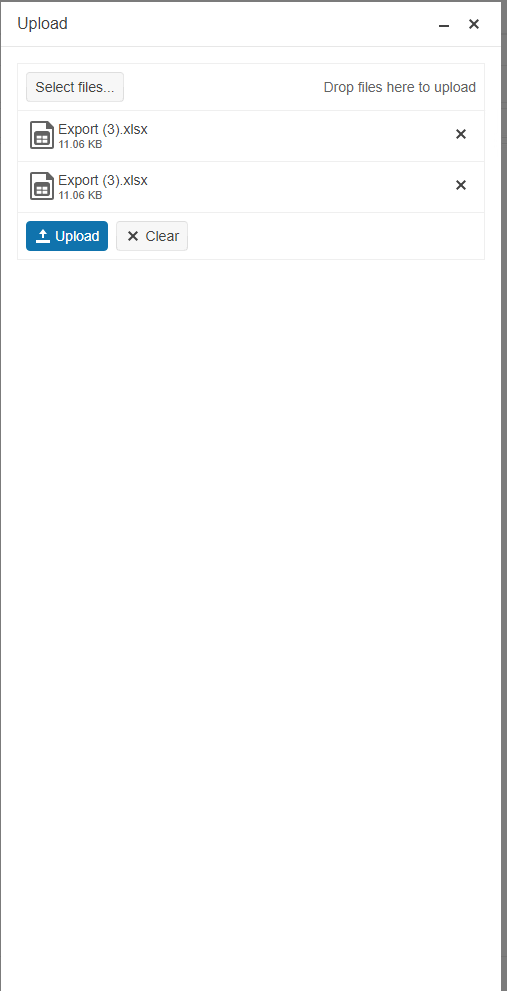
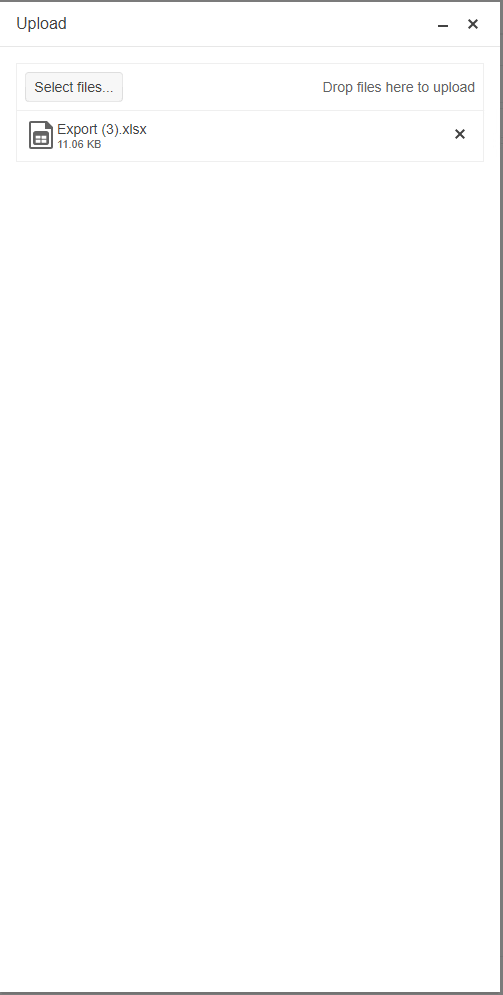
When using Kendo's Upload component when you select a file/files to upload there is a 20% chance that it will upload the same file twice. We switched auto upload off to help, but when you delete one of the dupped files the upload button disappears causing you to delete both of them and then re-upload the file.
Upload Code -
var w = $("#winFiles").data("kendoWindow");
w.setOptions({
width: $(window).width() - 150,
height: $(window).height() - 150
});
w.center().open();
$("body").on("click", "#lnkShowUpload", function () { showWinUpload(associationId, typeId) });
function showWinUpload(associationId, typeId) {
var w = $("#winUpload").data("kendoWindow");
$("#fileUpload").kendoUpload({
async: {
saveUrl: `/api/File/?typeId=${typeId}&associationId=${associationId}`,
autoUpload: false
},
validation: {
allowedExtensions: ["pdf", "jpg", "img", "png", "gif", "doc", "docx", "xls", "xlsx", "csv", "txt"]
}
});
w.setOptions({
height: $(window).height() - 175
});
w.center().open();
}
Hello Team ,
we are using .net mvc + angular js
i am unable to upload the image from the my desktop, please find the code below
scope.createKendoEditor = function(element, value) {
//debugger;
var k = $(element).kendoEditor({
"execute": onExecute,
"imageBrowser": {
messages: {
dropFilesHere: "Drop files here",
uploadFile: "Upload a file"
},
transport: {
read: "imagebrowser/read",
destroy: "imagebrowser/destroy",
create: "imagebrowser/createDirectory",
uploadUrl: "imagebrowser/upload",
thumbnailUrl: "imagebrowser/thumbnail",
imageUrl: "@FPK12.LMS.Framework.Utility.FullyQualifiedApplicationPath" + "/Temp/" + "@Utility.UserSessionID" + "/images/{0}?v="+@DateTime.UtcNow.ToString("MMddyyyyHHmmss")
}
},
"fileBrowser": {
messages: {
dropFilesHere: "Drop files here",
uploadFile: "Upload a file"
},
transport: {
read: "imagebrowser/read",
destroy: "imagebrowser/destroy",
create: "imagebrowser/createDirectory",
uploadUrl: "imagebrowser/upload",
thumbnailUrl: "imagebrowser/thumbnail",
imageUrl: "@FPK12.LMS.Framework.Utility.FullyQualifiedApplicationPath" + "/Temp/" + "@Utility.UserSessionID" + "/images/{0}?v=" +@DateTime.UtcNow.ToString("MMddyyyyHHmmss")
}
},
"value": value != null ? WirisPlugin.Parser.initParse(value) : value,
"tools": [
{ "name": "bold" },
{ "name": "italic" },
{ "name": "underline" },
{ "name": "strikethrough" },
{ "name": "justifyLeft" },
{ "name": "justifyCenter" },
{ "name": "justifyRight" },
{ "name": "justifyFull" },
{ "name": "insertUnorderedList" },
{ "name": "insertOrderedList" },
{ "name": "outdent" },
{ "name": "indent" },
{ "name": "createLink" },
{ "name": "unlink" },
{ "name": "insertImage" },
{ "name": "insertFile" },
{ "name": "subscript" },
{ "name": "superscript" },
{ "name": "createTable" },
{ "name": "addColumnLeft" },
{ "name": "addColumnRight" },
{ "name": "addRowAbove" },
{ "name": "addRowBelow" },
{ "name": "deleteRow" },
{ "name": "deleteColumn" },
{ "name": "viewHtml" },
{ "name": "foreColor" },
{ "name": "backColor" },
//{ "name": "formatting" },
{ "name": "fontName" },
{ "name": "fontSize" },
{
name: "wiris",
template: "<div id='" + element.replace("#", "") + "_toolbar'></div>"
},
{
name: "Media",
template: "<div id='" + element.replace("#", "") + "_media' style='cursor:pointer'> <img id='imgMedia' style='padding: 12.2px' title='Media' src='data:image/png;base64,iVBORw0KGgoAAAANSUhEUgAAABQAAAAUCAYAAACNiR0NAAAAAXNSR0IArs4c6QAAAARnQU1BAACxjwv8YQUAAAAJcEhZcwAADsMAAA7DAcdvqGQAAAGqSURBVDhPzdTNK0RRHMbx6yUvUYgsLYmdpFDessUG5Q+QouzssGBvhxUWNuwIC0qJIgvlZcVKKXkpFkjewvc5c++499zLzMLCU585c6Y79/5+Z84Z57+kEnvuGEiaOyaTDBSgGisoxTFeUYsTOKl6STIzuMI65nAPpQLTKDYzX/pwjrsI+XiHKsmDCtHn/cjFC+rhpOiFVGEH47jQB1ZU3QM6odbOcI1hzEOVN2MXJrrwBt4DojIFVfmGWahlVdiDS6iLeLqgG3pRxa3QD+FFD8tBHdTFJ7RMZVB1gdg3nMAHtqEbeJXruiWUY9EdI2PfcBKqQLQteqHY14WSaNtozbawaWaxdTuNvY2OvxVV5e2lUXRgEBvQWrYgC3a0ZfRA7YJ47FZUub96rdsjdI1NN1pDIO3QRi00s3BuoWPWBK8rjQ04gPZkIDqjOiVaI/8JkUZ31GZWe6vQqdCv/AxtdFVq4j1NKUIbss3sO8tQdSM4whhqcIgh6Hv+9U8qankg9tZJR4k7Kt0ItZwoC9CR+4naN/G3/Fu0XfQ/mGlmwWjj7+PJzP42jvMFvddvjvC2MvQAAAAASUVORK5CYII='> </div>"
}
]
}).data("kendoEditor");
setTimeout(function () {
if (value == undefined) {
$(k).focus();
}
}, 100);
return k;
}
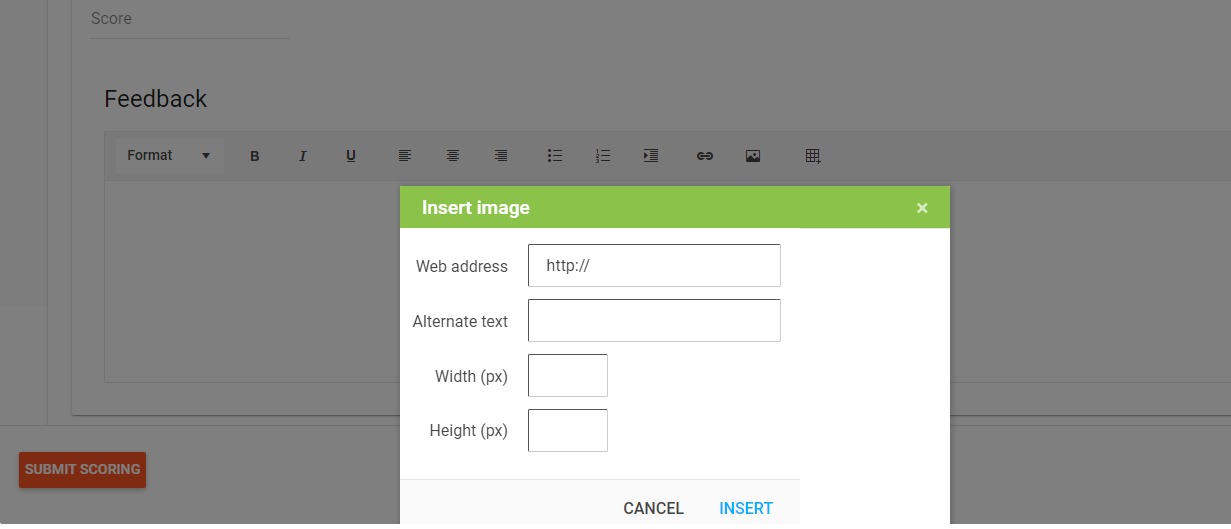 we are getting the web address URL we are expecting upload images/files from the My PC
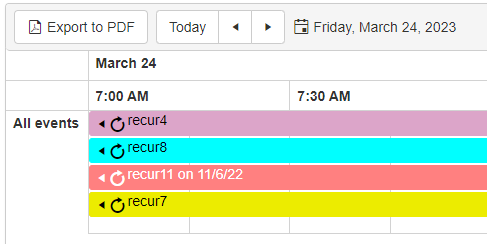
I see this most often in the All Day slot of the Timeline view. I do not believe it is isolated to just that though. Here's using the native code:
Here's the same page with the code fixed:
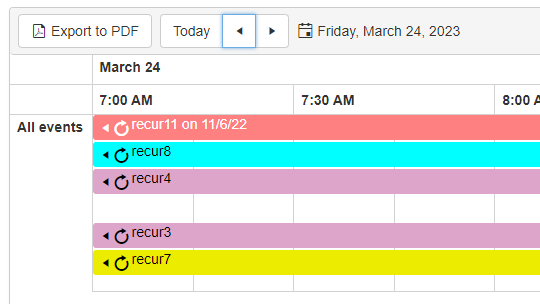
Please note that two events are covered up: recur3 and an event that is NOT an all day event starting at 2pm. That's what the gap is. So yes, this gap is correct. Also note: In the first window I can press F12 to open the inspector, and manually delete the event elements which reveal the missing ones underneath. They are overlaid on top of each other.
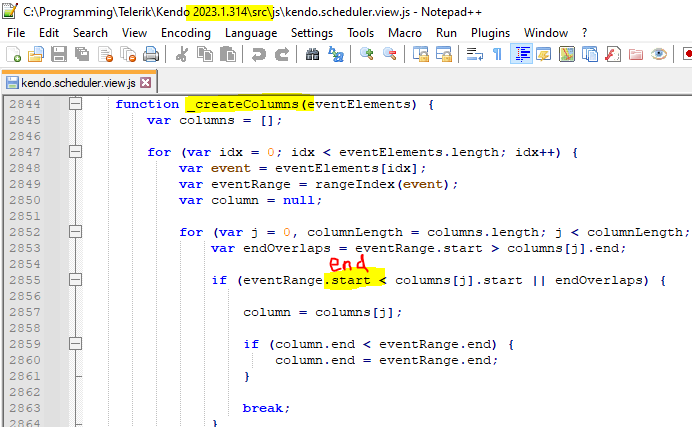
After some debugging, here is the fix. The file, version, method, and line numbers are all here for you. The fix is highlighted on line 2855. The highlighted "start" should be "end".