

Tint transformation function is used to transform Device N color in Alternate colorspace.
The style of the table fallbacks to the default one and when the content of a cell is deleted, the current font family and font size are changed. The scenario is working as expected in versions before R3 2016.


When an RTF document contains table inside table in the header or in the footer, the document cannot be imported due to NullReferenceException. In the case of RadRichTextBox the exception is handled, but it's not when RtfFormatProvider is used directly.

The bug is regression in 2016 R3.
ArgumentException: WebView2 was already initialized with a different CoreWebView2Environment. Check to see if the Source property was already set or EnsureCoreWebView2Async was previously called with different values.
at Microsoft.Web.WebView2.Wpf.WebView2Base.EnsureCoreWebView2Async(CoreWebView2Environment environment, CoreWebView2ControllerOptions controllerOptions)
The committed RadSpreadsheetRibbon_style.xaml renders the AI group unconditionally:
<telerikRibbon:RadRibbonGroup Header="AI">
Workaround:
private void HideAIButton()
{
    var aiButton = this.spreadsheetRibbon
        .ChildrenOfType<RadRibbonButton>()
        .FirstOrDefault(b => b.Text == "AI Tools");
    if (aiButton == null)
    {
        return;
    }

    var aiGroup = aiButton.ParentOfType<RadRibbonGroup>();
    if (aiGroup != null)
    {
        aiGroup.Visibility = Visibility.Collapsed;
    }
    else
    {
        aiButton.Visibility = Visibility.Collapsed;
    }
}
The settings of the empty paragraphs in the document fallback to the default document settings (Verdana).

The EnumerateChilderOfType() method can be used to traverse all the paragraphs in the document and apply them the same font family as a workaround.

The issue reproduces only if the content control was locked before any text is entered (when the text placeholder is displayed).
When GridViewClipboardPasteMode is set to AllSelectedCells and a single clipboard value is pasted into more than one selected cell, RadGridView updates the cell values but does not re-evaluate live grouping for the edited items - rows remain under their previous group header until an explicit Rebind()/refresh.
Pasting into a single cell at a time re-groups correctly.
To work this around, call the CommitEdit and EditItem methods of RadGridView for each row data item in which data was pasted. You can do that in the Pasted event handler:
 private void RadGridView_Pasted(object sender, RadRoutedEventArgs e)
 {
     var editableView = (IEditableCollectionView)this.gridView.Items;
     var affectedItems = this.gridView.SelectedCells.Select(c => c.Item).Distinct().ToList();

     foreach (var item in affectedItems)
     {
         editableView.EditItem(item);
         editableView.CommitEdit();
     }
 }
Steps to reproduce:
1. Open Word 2016 or later. Create a new blank document. Type any text. **File → Save As** → `original.docx`.2. Verify mode 15: rename `original.docx` to `.zip`, open `word/settings.xml`, confirm `<w:compatSetting w:name="compatibilityMode" ... w:val="15"/>`. Rename back to `.docx`.
3. Open Telerik's WPF Demos sample in Microsoft Store (RichTextBox demo). Open `original.docx`.
4. Without making any edit, click **Save** (or File → Save As) → `roundtrip.docx`.
5. Rename `roundtrip.docx` to `.zip` and open `word/settings.xml`. The value is now `<w:compatSetting w:name="compatibilityMode" ... w:val="14"/>`.
Here is the stacktrace of the error:
Telerik.Windows.Controls.Data.dll!Telerik.Windows.Controls.RadPropertyGrid.EnsureSourceProperty(Telerik.Windows.Controls.Data.PropertyGrid.PropertyDefinition propertyDefinition) Line 3279 C#  Telerik.Windows.Controls.Data.dll!Telerik.Windows.Controls.RadPropertyGrid.RetrieveCurrentContextPropertyValue(Telerik.Windows.Controls.Data.PropertyGrid.PropertyDefinition propertyDefinition) Line 3207 C#  Telerik.Windows.Controls.Data.dll!Telerik.Windows.Controls.Data.PropertyGrid.PropertyGridField.CurrentContextPropertyValue.get() Line 70 C#  Telerik.Windows.Controls.Data.dll!Telerik.Windows.Controls.Data.PropertyGrid.PropertyGridField.SetDataContextWhenEditorAttributeIsSet(System.Windows.FrameworkElement content, Telerik.Windows.Controls.Data.PropertyGrid.PropertyDefinition contextPropertyDefinition) Line 394 C#  Telerik.Windows.Controls.Data.dll!Telerik.Windows.Controls.Data.PropertyGrid.PropertyGridFieldContentPresenter.PrepareEditor() Line 184 C#  Telerik.Windows.Controls.Data.dll!Telerik.Windows.Controls.Data.PropertyGrid.PropertyGridFieldContentPresenter.BeginEdit() Line 93 C#  Telerik.Windows.Controls.Data.dll!Telerik.Windows.Controls.RadPropertyGrid.BeginEditSafe(Telerik.Windows.Controls.Data.PropertyGrid.PropertyGridField field) Line 1243 C#  Telerik.Windows.Controls.Data.dll!Telerik.Windows.Controls.RadPropertyGrid.EnsureFieldForEditOperation(Telerik.Windows.Controls.Data.PropertyGrid.PropertyDefinition propertyDefinition, System.Action<Telerik.Windows.Controls.Data.PropertyGrid.PropertyGridField> finishedCallback, System.Action<Telerik.Windows.Controls.Data.PropertyGrid.PropertyDefinition> failedCallback) Line 1194 C#  Telerik.Windows.Controls.Data.dll!Telerik.Windows.Controls.RadPropertyGrid.BeginEdit(Telerik.Windows.Controls.Data.PropertyGrid.PropertyDefinition propertyDefinition) Line 1224 C#
Telerik.Windows.Controls.Data.dll!Telerik.Windows.Controls.RadPropertyGrid.BeginEdit() Line 1204 C# Telerik.Windows.Controls.Data.dll!Telerik.Windows.Controls.Data.PropertyGrid.PropertyGridFieldContentPresenter.OnMouseLeftButtonUp(System.Windows.Input.MouseButtonEventArgs e) Line 57 C#<telerik:RadPropertyGrid EditMode="Single" RenderMode="Flat" EnableEditorCaching="False" />
If header/footer containing annotations is set to a document using RadDocumentEditor.ChangeSectionHeader or ChangeSectionFooter methods, the annotations in the body of the header/footer are not paired in the resulting document.

When such document is exported to XAML, NullReferenceException is thrown in the ReindexAnnotationMarkers internal method.

Workaround:
- Do not use RadDocumentEditor to set the footer:
//editor.ChangeSectionFooter(radDocument.Sections.First, HeaderFooterType.Default, new Footer { Body = footerRadDocument });
radDocument.Sections.First.Footers.Default.Body = footerRadDocument;

- Manually "fix" the cloned footer body before the export:
((ISupportInitialize)radDocument.Sections.First.Footers.Default.Body).EndInit();
Loading/editing document with large lists (with 1561 or more items) throws IndexOutOfRangeException when incorrectly tries to convert numbering to letters.

Workaround: Change list type to one which does not include letter NumberingFormat in any of its levels, for example Numbered Hierarchical or custom one.

LocalizableException with text "Format string is not in the correct format.", with inner ArgumentException "Format string is not in the correct format." is thrown.

Currently the validation doesn't allow number format string starting with date or time formatting to have more that one section (for negative and zero numbers). Excel allows this type of number formats and if you set format like dd/mm/yyyy;[RED](#.##0); the positive numbers are visualized as dates, but negative numbers are visualized as numbers and their fore color is red.

Examples (including the final semicolons):

- ss;

- dd;

- dd/mm/yyyy;;

- mmm-yy;mmm-yy;_-* "-"??_-;_-@_-

Observed when loading a document:
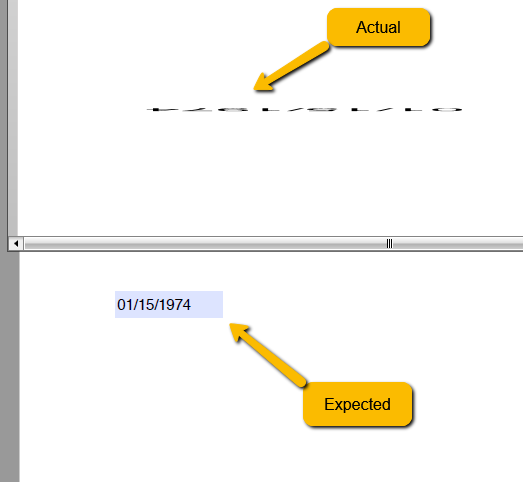
When number format ends with N commas, the resulting number should be divided to 1000 N times. Instead, such commas are ignored.

For example, if the format is #.0,, and the value of the cell is 12,200,000, the number should be displayed as 12.200.0
